Small Vessel, Big Difference: Building a Glass Shelf for Botanical Low-Alcohol Sips
There is a particular disappointment in being handed a low-alcohol botanical drink in a pint glass. Nothing is technically wrong. The liquid is the same. The company is the same. But the serve has been flattened before it reaches the table: the aroma drifts off across a wide rim, the bubbles make an early exit, and a carefully made drink starts to look like a consolation prize.
A pint pot is not the enemy. It is simply a tool built for a different job. In the UK we have spent decades treating it as the default vessel for anything cold and vaguely celebratory, and that default does botanical low-alcohol drinks no favours. These are drinks with edges — citrus peel, herb, spice, root, a little bitterness — and those edges need a glass that helps rather than hides them.
What the glass is actually doing
Glassware is not decoration. It changes three things at once: how much aroma reaches your nose, how quickly the drink warms, and how long the carbonation lasts. Get those three roughly right and a modest low-alcohol serve feels deliberate. Get them wrong and even a good bottle tastes like an afterthought.
Aroma is the big one. Botanical drinks live or die on the smell before the sip: rosemary, coriander seed, gentian, grapefruit peel, a whisper of something floral. A wide pint rim gives those aromas a runway to nowhere. A slightly narrower mouth, or a glass that curves inward at the top, gathers them instead. You do not need a sommelier-level vessel. You need a glass with an opinion about where the smell should go.
Temperature is the second factor. A low-alcohol botanical drink is often more fragile than a full-strength one because there is less alcohol to carry the flavour and less body to hide behind. Too warm and it can taste syrupy or hollow; too cold and the botanicals go quiet. A huge glass with a small pour gives the liquid plenty of surface area and plenty of room to pick up room heat. A smaller glass keeps the serve in proportion and makes it easier to drink while it is still at its best.
Carbonation is the third. Bubbles are not just texture; they carry aroma upward. A tall, narrow glass is good for a long, fizzy serve because it limits the surface area and keeps the sparkle in play. A wide, open tumbler is better for something still, amber or rooty, where you want the drink to relax rather than fizz away. Matching the glass to the fizz is half the battle.
The pint-glass problem, in plain terms
When a pub serves a botanical low-alcohol aperitif in a pint glass, three things usually happen. The drink looks under-filled, because it is. The headspace is enormous, so the aroma has somewhere else to be. And the wide surface lets the drink warm and flatten faster than it should. None of this is a crime, but it is a small waste of everyone's effort.
There is also a psychological effect. A pint glass says session, volume, refreshment. That is fine for a long drink on a hot afternoon. It is less fine for a drink you chose because you wanted something considered. The vessel sets the expectation before the first sip. If the glass says 'just a soft drink', the drink has to work harder to prove otherwise.
A short pub script
Asking for a different glass can feel fussy. It should not. In most UK pubs, the request is easy and usually met with a shrug and a search under the bar. Try a simple line: 'Could I have that in a wine glass rather than a pint, if you have one?' For a long sparkling serve, ask for a highball or a slim Collins glass. For something served short over ice, ask for a tumbler or a rocks glass. If the bar only has pint glasses and half-pint glasses, take the half-pint. It is not perfect, but it is closer.
A useful rule: match the glass to the serve you would expect in a decent bar, not to the amount of liquid. A 125ml low-alcohol aperitif does not need a 568ml vessel. A 200ml sparkling botanical drink is happier in a wine glass or a highball than in a pint pot. And if you are ordering at the bar in a busy pub, ask before the drink is poured. It is much easier to swap an empty glass than to transfer a finished serve.
Four glasses, no museum
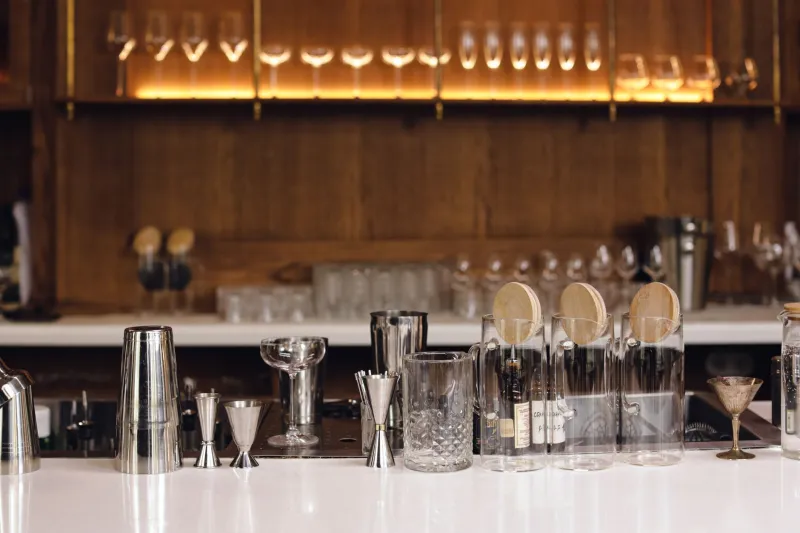
A home glass shelf does not need to be large. Four shapes will cover most botanical low-alcohol drinking through winter and beyond.
First, a stemless wine glass. It is forgiving, easy to wash, and good for sparkling botanical drinks, dry aperitifs and anything with a wine-like ambition. Second, a highball or slim Collins glass. This is the workhorse for long, fizzy serves with plenty of ice and a citrus twist. Third, a small tumbler or rocks glass. Keep it modest — around 200ml to 250ml — for short, amber, rooty or spiced serves. Fourth, a small stemmed glass, perhaps a copita or a sherry glass, for strong-flavoured low-alcohol sippers where a little goes a long way.
That is enough. You do not need a different glass for every bottle. You need a few vessels that make the drink feel intentional and let the botanicals speak. Charity shops, supermarket ranges and old cupboard clear-outs are all fair sources. A mismatched shelf is fine. A thoughtless one is the only real problem.
Winter notes
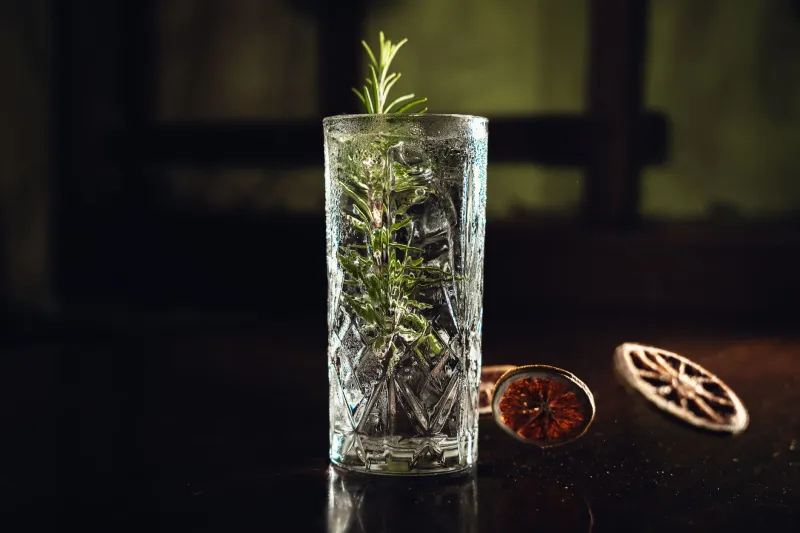
Cold weather changes the calculation. In winter, a low-alcohol botanical drink often moves slower: smaller pours, more spice, less ice, perhaps a warm serve. Small glasses earn their place here because they keep the drink close and stop it cooling or warming at the wrong rate. A little tumbler for a root-and-citrus sipper, a stemless wine glass for a sparkling aperitif before Sunday lunch, a highball for a long fizzy serve with a rosemary sprig — that is a sensible winter shelf.
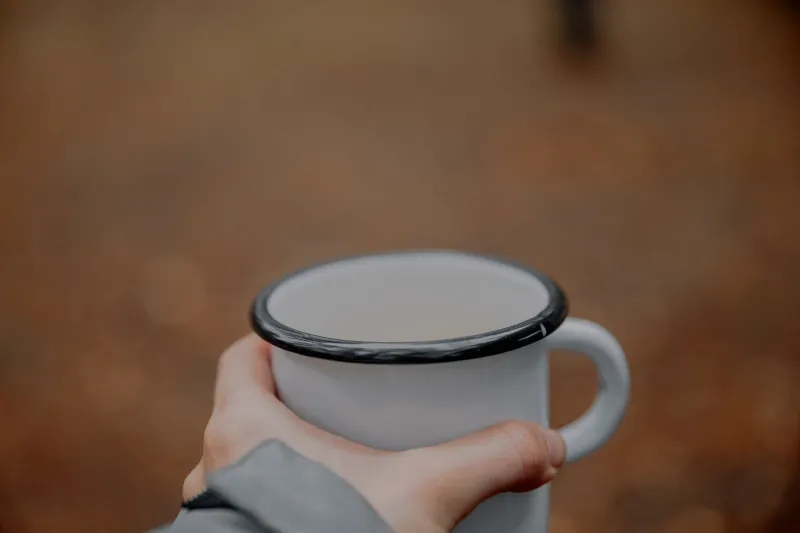
If you are serving warm low-alcohol botanical drinks, use a heatproof glass or a small cup and keep the pour modest. Warmth amplifies aroma, so a narrow mouth helps. It also makes sweetness more obvious, which is why a small vessel is kinder than a mug the size of a flowerpot.
At Binary Botanical, we are not going to tell you that the right glass makes a bad drink good. It will not. But the wrong glass can make a good drink taste ordinary, and that is a waste. Choose a vessel that gives the botanicals somewhere to gather, keeps the serve in proportion and respects the fact that you chose something a little more considered than a pint. The drink deserves it. So do you.