The Threshold Hour: A Botanical Ritual for When the Laptop Closes
There is a particular kind of quiet that arrives when you close a laptop at home. No train doors, no pavement rhythm, no mental playlist for the walk from the station. Just the desk, the mug ring, and the low hum of the fridge. For anyone who has spent the last few years working from the kitchen table, the lost commute has left a gap. Not a dramatic one. More of a shrug-shaped hole where a boundary used to be.
The temptation is to fill it with a drink. The better move, I think, is to fill it with a ritual. And a low-alcohol botanical serve is unusually good at being exactly that: small enough to be sensible, interesting enough to hold your attention, and quick enough to become routine without becoming a chore.
This is not a pitch for sobriety, nor a sneer at a proper drink. It is an argument for the threshold hour — that short, deliberate window between the last email and the first proper sit-down of the evening. In November, when the dark arrives before five and the heating clicks on with a complaint, that window is worth protecting.
Why the commute worked (and what it actually did)
The commute was never really about transport. It was a gap. A change of scene, a change of pace, a change of self. You left the version of you who answers Slack messages and became the version who notices the price of sprouts in the corner shop. The journey was often grim — cancelled trains, damp shoulders, someone eating a pasty with real commitment — but it did a job.
Working from home removed the gap. The desk became the kitchen table; the kitchen table became the desk. Without a marker, the day just leaks into the evening. You finish a call at 6.10pm and find yourself still half-listening to a meeting that ended twenty minutes ago.
A ritual does not need to be elaborate. It needs to be repeatable, slightly physical, and distinct from the work you have just stopped doing. The point is not the alcohol — or the absence of it. The point is the pause.
The case for a low-alcohol botanical serve
There is a reason a gin and tonic became the shorthand for the end of the working week. It is cold, bitter, aromatic, and it demands a little attention. A low-alcohol botanical pour does the same job with a gentler landing. You get the ritual of the pour, the smell of the peel, the crack of the tonic, the first sharp sip — without the fog that can roll in after a stronger drink on a work night.
The trick is to make it feel like a drink, not a substitute. Use a proper glass. Cut a fresh piece of citrus. Don't just glug a low-alcohol spirit into whatever tumbler is nearest the sink. The ritual is in the details, and the details are cheap.
The threshold pour: a simple November recipe
This is not a strict formula. It is a shape. Adjust it to what you have.
The Threshold Pour
- 50ml low-alcohol botanical spirit (0.5% ABV or similar)
- 150ml light tonic or soda
- A strip of grapefruit or orange peel
- A small rosemary sprig, if you have one
- Plenty of ice
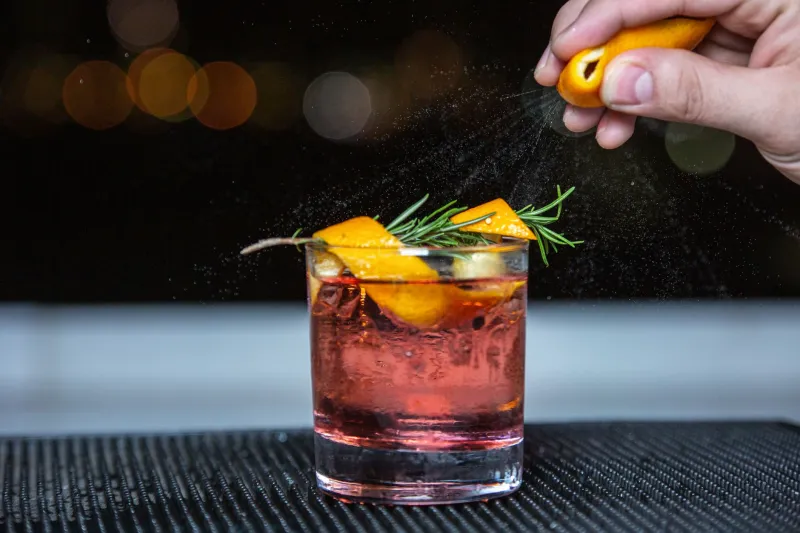
Method: fill a tumbler with ice. Add the spirit and stir once or twice to chill. Pour over the tonic. Express the citrus peel over the top — fold it skin-side down and give it a quick squeeze so the oils land on the surface — then drop it in. Add the rosemary, if using, and give the whole thing a final stir with the sprig. Takes about three minutes.
Why it works: the peel gives you a bright, bitter edge; the rosemary gives a savoury, almost wintery note; the low-alcohol spirit keeps the whole thing light enough that you can still cook dinner afterwards. If you want a non-alcoholic version, use a good verjus or a strong botanical tea (rosemary and grapefruit peel steeped for five minutes) in place of the spirit, and top with tonic.
The five-minute sequence
The drink is only half the ritual. The other half is the sequence around it. This is what I do, and it works for me:
- Close the laptop, not just the lid. Shut the screen, put it in a drawer, or at least turn it to face the wall. If you have a work phone, put it in another room. The threshold is physical before it is psychological.
- Change one thing. Swap your work jumper for a different one. Put on slippers. Take off your headphones. It sounds daft; it isn't. The brain notices small changes of costume.
- Make the drink slowly. This is the important bit. Don't rush the pour. Cut the peel properly. Smell the rosemary. Let the three minutes be a boundary in themselves.
- Sit somewhere else. Not the desk chair. Not the kitchen counter where the laptop lives. A sofa, a stool by the window, the bit of floor near the radiator. The location does the rest.
- Put something else on. A record, a podcast, the radio. Something that is not a work playlist. The sound change is a cue.
What this is not
It is not a productivity hack. It is not a replacement for a proper commute if you have one, and it is not a cure for the blurry edges of home working. It is just a small, repeatable act that says: the working day is over, and the evening is different.
It is also not about getting a buzz. The low-alcohol part matters here, but not because there is virtue in restraint. It matters because a lighter drink lets you actually taste the ritual. A stronger drink can flatten the evening into a single mood; a low-alcohol botanical pour keeps the edges sharp. You notice the rosemary. You notice the peel. You notice that you are, finally, not at work.
In November, when the light goes early and the evenings stretch out, that noticing is worth something. The desk-to-kitchen commute is a short one, but it still needs a door. This is a decent way to build one.