Counter Culture: The High-Street Case for Your Botanical Drink Cupboard
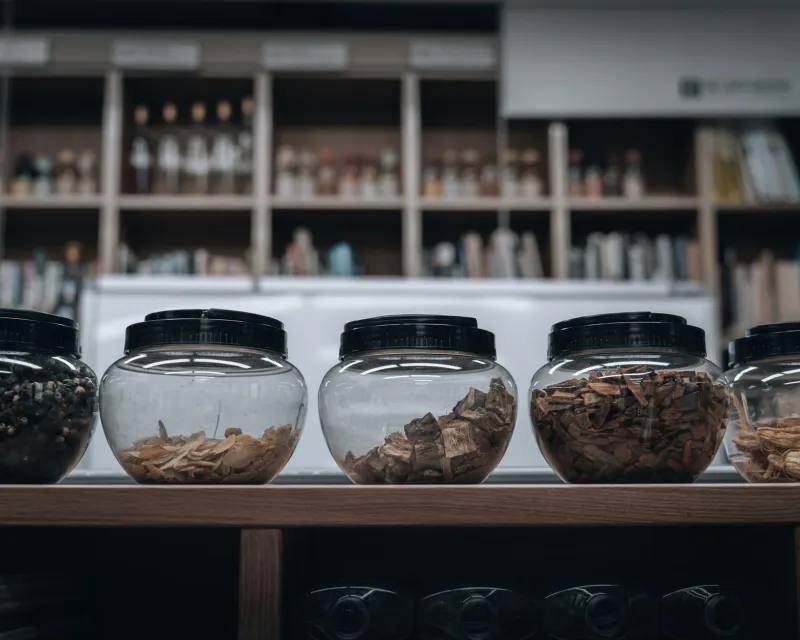
There is a particular smell in a good independent health food shop. It is dried chamomile, old paper, loose mint and something faintly resiny from the back shelf. It is not the smell of a website. And that is the point.
If you make low-alcohol botanical drinks at home, the internet is convenient but oddly blind. You order a 100g pouch of something described as a botanical infusion blend, wait three days, and discover it tastes of dusty potpourri. The high street lets you smell before you buy, ask a question, and walk out with 40g instead of a lifetime supply. It is foraging, just with a shop assistant and a set of scales instead of a hedgerow.
The shop that smells of possibility
Not every health food shop is worth your time. Some are wall-to-wall pills with a sad rack of flapjacks by the till. The ones you want are the old-fashioned sort: jars of loose herbs, a scoop, a scale, handwritten labels, and someone behind the counter who knows the difference between cut and powdered. They may be a wholefood shop, a herbalist, a market stall, or the slightly chaotic shop two doors down from the charity shop. The common thread is loose ingredients sold by weight.
This is high-street foraging. You are not picking nettles from a verge, but you are doing the same thing: looking closely at what is already around you, taking a small amount, and using it well. The advantage is that someone else has done the drying and the labelling. The disadvantage is that you still have to ask the right questions.
What to ask behind the counter
Start with the practical stuff. Is this food-grade, or is it sold for another use? Herbalists often stock both culinary and medicinal herbs, and for drinks you want the culinary side. Ask when it was packed or harvested. Ask whether it is cut, sifted, or powdered. Whole and cut herbs keep their flavour far longer than powders, which go flat and dusty within weeks. If there is a jar open, ask to smell it. A good shop will not mind.
Then ask what they would use. Not in a vague wellness sense, but for a drink. Something bitter for an aperitivo-style sip. Something floral for a low-alcohol spritz. Something tart for a long tonic. Staff in these shops often have a favourite chamomile or a strong opinion about hibiscus, and that is worth more than a five-star online review. Avoid blends that list flavourings, sweeteners, or a long list of ingredients you cannot identify. Single ingredients give you control.
The botanicals that beat the internet
Some things are genuinely better bought in person. Dried hibiscus is a good example: the flowers should be deep crimson and smell sharply tart, not like old tea. Online blends often use broken petals and dust. Chamomile should be whole flower heads, not mostly stems. Lemon verbena is hard to find fresh in the UK and loses its bright sherbet scent quickly when ground, so buy small amounts of the cut leaf and use it within a few months. Dried bitter orange peel is the backbone of many low-alcohol aperitivo blends, and it is often cheaper by weight from a herbalist than in a branded cocktail pouch. Gentian root is ferociously bitter, so a 10g bag will last ages. Cardamom pods, coriander seed and fennel seed are usually fresher in a shop with good turnover than in a giant online bag that has sat in a warehouse.
These are commodity ingredients. The online mark-up often comes from the word botanical on the label, not from the plant itself. A high-street shop selling single herbs is not trying to sell you a lifestyle. It is selling you 50g of hibiscus. That is a good start.
A cupboard for under twenty quid
You do not need a wall of jars. A small, working cupboard is better. Try 50g dried hibiscus, 50g chamomile flowers, 25g lemon verbena, 25g dried bitter orange peel, 10g gentian root and 25g green cardamom pods. At an independent shop, that little haul can come in around the price of two cocktails in a city bar. It will make weeks of cold infusions, tea concentrates, syrups and low-alcohol bases.
Use them with a light hand. Hibiscus gives colour and tartness to a tonic. Chamomile is soft and apple-like, good with a non-alcoholic spirit that needs rounding out. Lemon verbena lifts a dull kombucha. Bitter orange peel and gentian need restraint: a little goes a long way, especially gentian, which can dominate a drink with a few grams. Cardamom is best cracked fresh, not bought ground.
Storing the haul
Take the herbs out of the paper bag as soon as you get home. Glass jars in a dark cupboard are ideal. Label the date you bought them. Whole and cut herbs will hold for a year or so, but they fade. Smell before each use. If the scent has gone dusty or papery, the drink will taste the same. Buy small, buy again. That is the rhythm of a high-street cupboard, and it is a better rhythm than a cupboard full of half-used online pouches.
The best botanical drinks cupboard is not built in one click. It is accumulated, jar by jar, from shops that still weigh things out and answer questions. The high street is not a compromise. It is a pantry with a person in it.